Congratulations on choosing to switch to reusable cups and food ware in your workplace!
This change is about small steps that make a big difference. It’s not just about providing cups and signage, it’s about helping your staff to create better habits and a workplace culture that truly supports reuse.
That’s where easy-to-follow guide will help. It’s packed with practical ideas that work, based on best practice behaviour change principals designed to set you up for long-term success.
It’s also fun to implement and can bring your team closer together.
Why Reuse?
Reusable cups and containers require less resources over their lifespan than single-use packaging. Most importantly, they are used they are washed and used again – saving waste from landfill each time.
Getting Started
We recommend you look through the actions first to get to know the program, then go back and start with Action 1. Each step explains what to do and includes resources to help you achieve it.




ACTION 1 – PLANNING
Good planning is key to success. It keeps things organised and ensures no important steps are missed.
Through the planning stage, you will identify what needs to be done, how to do it, and who will be responsible. We’ll help you to set clear goals, break them into smaller tasks, and create a timeline to stay on track.
STEPS
1. START YOUR PROGRAM PLAN
We have provided a Program Plan Template (docx) – you can fill out this plan as you go through this guide. To help you keep track, we’ve also provided a Program Checklist (pdf) you can tick off.
Start your plan by setting clear goals. What are the reusable items you want to target? How many single-use plastic items would you like to avoid? Make sure your goals are SMART – Specific, Measurable, Achievable, Relevant, and Time-Bound.
Add your goals into your plan. Track your program’s progress regularly and adjust your plan as needed.
Resources for this step
2. FORM A TEAM AND HOLD A PLANNING WORKSHOP
Form a team to drive the program. Who will be implementing it? Which departments need to be involved? Include at least one senior leader (for top-down support), representatives from key departments, and a decision maker from communications or marketing.
We have provided a Planning Meeting Checklist (pdf) . Hold your first meeting and use the checklist to ensure you’re covering all bases.
Resources for this step
3. ASSIGN ‘REUSE CHAMPIONS’
Appoint ‘reuse champions’ from each department. These are supportive staff who will lead by example, helping make reuse a lasting part of workplace culture.
They also support regular check-ins/meetings with the program team, offering insights on challenges and successes to help the team ensure the program stays relevant and effective.
We’re created a Reuse Champions Callout (docx) template you can use to recruit them.
Resources for this step
4. SET YOUR BUDGET & TIMELINE
Budget -How much funding is available for your program? Identify this and write the amount in your Program Plan’s ‘Budget’ section. You can complete a budget breakdown later, but keep this amount in mind as you move forward towards costing out your program initiatives.
Timeline – How long will your program be? Use the Program Timeline Template (docx) to map out your timeline. Add this information into the ‘Timeline’ section of your Program Plan.
Resources for this step
5. COMPLETE YOUR PROGRAM PLAN
Work though the rest of the actions in this Guide. These include making decisions on data collection, reuse system/s, cafe engagement, behaviour change initiatives and communications, and external promotion.
In each of them you will have planning activities – as you complete these, add them to the relevant section of your plan until your plan is finished.
6. OBTAIN APPROVALS
Obtain necessary approvals on your Program Plan. Once you have approval, you can launch your program!
ACTION 2 – DATA COLLECTION
How can you tell if your project is working? Look at the data.
Collecting data will help you measure your program’s success. It will show you how people are responding to your initiatives and provides valuable insights into staff behaviours.
STEPS
1. DECIDE ON DATA COLLECTION METHODOLOGY
Data should be collected both before the program starts (baseline data) and during the program’s implementation, at regular intervals.
Baseline data captures the current situation. Collecting it over several months, where possible, helps you understand existing behaviours. Continue data collection during the implementation phase (e.g., over 6 months) to monitor progress and measure success.
Methods for data collection for this program include:
- Monthly bin audits.
- Weekly or fortnightly observations of staff activities.
- Employee surveys at the start and end of the program.
We recommend you include all 3 methods into your program, but this will depend on your capacity and needs. Decide on what data collection methods you’d like to include in the program (you can find more information on each one in the steps below) and add this into your Program Plan from Action 1.
2. PREPARE & SCHEDULE WASTE AUDITS
Waste audits gather quantitative data by counting and weighing single-use coffee cups and other discarded food ware items. Here is one we completed, to show you the process.
Complete audits monthly, if possible, to allow you to track data changes through the length of the program.
Waste audits require a clear process agreed upon with relevant stakeholders. For example, the property manager can coordinate with cleaners to ensure rubbish bags from designated office floors are placed in the audit room during their evening shift. After the audit, the bags can be left for cleaners to remove during their next shift and reweighed in the building’s data system.
We have provided several resources to assist you:
- Instructions (docx) on preparing and conducting waste audits.
- A template Job Safety and Environmental Analysis (JSEA)(docx) to identify and mitigate risks.
- A template Waste Audit Data Sheet (docx) to record the data during the audit
- A Waste Audit Data Tracker (xlsx) – a spreadsheet to record the data from each audit into.
Create a schedule for waste audits for the duration of the program and share with appropriate stakeholders.
Resources for this step
3. PREPARE & SCHEDULE OBSERVATIONAL SURVEYS
An observational survey involves watching a process or situation and documenting what is seen or heard without interfering with participants.
For this program, observational surveys track the number of single-use and reusable cups (or other items) brought into the office. They allow you to observe actual behaviours, and see how these change over time.
We have provided several resources to assist you:
- Instructions (docx) on preparing and conducting observational surveys.
- A template Observational Survey Data Sheet (docx), to record the data during the survey.
- An Observational Survey Data Tracker (xlsx)– a spreadsheet to record the data from each survey into.
Conduct them at regular intervals (weekly or fortnightly) for at least one hour during peak times, such as mornings or lunch.
Surveys should be discreet, ideally in the building lobby, where the observer is unlikely to be noticed. Avoid informing staff about the surveys and use an observer not known to staff.
One limitation is difficulty distinguishing your staff from other building tenants. If this occurs, note it as a limitation in your final report.
Resources for this step
4. PREPARE & SCHEDULE EMPLOYEE SURVEYS
Staff surveys are designed to gather insights into employees’ attitudes, opinions, and behaviours regarding reusable food ware. They help shape your program and evaluate its success.
We recommend conducting both an initial and a final staff survey:
- Initial Survey – provides baseline data to guide your choice on behaviour change initiatives. Conduct after most waste audits and observational surveys are complete to avoid influencing behaviour, but before the finalising the Program Plan.
- Final Survey – conducted at the end of the program. Comparing these results with the initial survey will show how staff attitudes, opinions, and behaviours have evolved over time.
We have provided several documents to assist you, which can be tailored to suit your workplace:
- Instructions (docx) on preparing and conducting staff surveys
- A template Initial Staff Survey (pdf)
- A template Final Staff Survey (pdf)
- A example Kick off Memo (pdf) – to get the word out to the staff and encourage them to complete the survey.
Decide on the best survey delivery method, checking with your IT or security team to ensure it meets workplace security protocols.
Resources for this step
5. IMPLEMENT DATA COLLECTION SCHEDULE
Once you have prepared and scheduled all of your data collection activities, it’s time to implement them.
Just make sure to complete several baseline audits and observational surveys before sending staff surveys or informing staff about the program, to avoid influencing a change in behaviour while collecting baseline data.
ACTION 3 – LOGISTICS
A successful program relies on providing employees with reusable items and adequate facilities.
STEPS
1. CHOOSE YOUR PREFERRED REUSABLE SYSTEM
There are many options for ensuring staff access to reusables. They can bring their own (BYO) cups or use mugs already available in workplace kitchens. Alternatively, you can partner with external providers for cup or container-sharing and wash-up services.
Below are some ideas to explore. Click through the tabs to see them all.
For all systems except full-service options, staff will need access to kitchens with a dishwasher or sink to wash their own cups. Your choice will depend on your program’s budget and needs, and wash-up facilities available in your workplace.

1. BYO REUSABLE CUPS
How does it work? Encourage employees to bring their own reusable cups into the office. Bringing a cup you love means you’re more likely to use it.
Who supplies the cups? Employees bring their own.
How does wash-up work? Employees can either wash their cup at work or they can take it home to wash and bring back.
Is there anything else I need? Use your program communications to promote BYO. Posters, digital screensavers, memos, videos and competitions work particularly well.

2. GIFTED REUSABLE CUPS
How does it work? Your workplace gifts reusable cups to each employee. These may be branded or unbranded – whichever appeals best to your staff.
How does wash-up work? Employees can either wash their cup at work or they can take it home to wash and bring back.
Is there anything else I need? Use your program communications to promote use of the cups. Posters, digital screensavers, memos, videos and competitions work particularly well. You could also encourage staff to leave cups on their desk so they don’t forget to bring them.

3. MUG LIBRARY
How does it work? You supply a collection of mugs, cups or jars for people to borrow and return. These can be kept in the kitchen or on trollies near building/floor exit points.
How does wash-up work? Employees either wash and return items to the library, or place them in the dishwasher, with someone assigned to restock the station (your ‘Reuse Champions’ may take on this role).
Is there anything else I need? Make sure you put signage on your mug library and make it clear how it works. Have fun with it! Second-hand shops are a great place to source an eclectic range of cups and mugs.
4. MICROPOOL SYSTEM
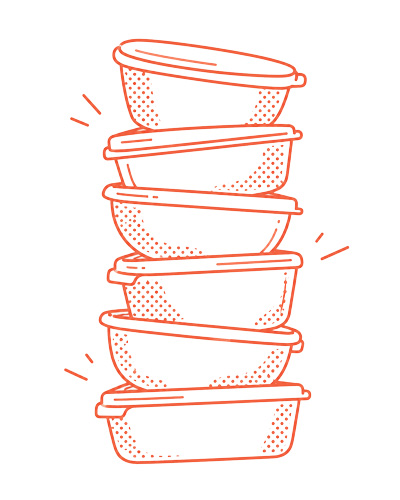
How does it work? A micropool is a shared supply of reusable cups and containers hired or purchased from an external supplier. These often come with a station featuring stands and signage. Employees grab items for takeaway, return them, and you have them cleaned and restacked for the next user.
How does wash-up work? Employees either wash and return items to the station, or place them in the dishwasher, with someone assigned to restock the station—your ‘Reuse Champions’ may take on this role.
Example suppliers: Returnr

2. FULL SERVICE OFFERING
How does it work? An external supplier provides the reusable cups or containers, then collects, washes, and returns them for reuse. Employees drop used items into a designated return pod in the building, which the supplier collects. This system is especially effective in large, busy workplaces in major cities.
Is there anything else I need? Make sure you include signage with your system and explain how it works. Your supplier should provide you with these.
Example providers: Cercle
2. IMPLEMENT YOUR CHOSEN REUSABLE SYSTEM
For BYO & gifted reusable cups: You can purchase cups to gift to employees from any reusable cup manufacturer. Most offer a custom service that allows you to have your logo imprinted on the cup, and you may even be able to select your brand colours. Employees can also be encouraged to bring their own cups from home. To be sure they don’t forget to bring their cup, you can encourage them to keep a spare in the office.
Mug Library: We have provided Instructions on how to set up a mug library (pdf) and a Mug library poster (pdf). Make sure you have enough mugs for a good proportion of staff in your office.
Micropool & full service offerings: How you implement your micropool system or full service offering will depend on the system you choose. Your service provider will give you instructions and resources to help guide you.
Resources for this step
3. ASSIGN OVERSIGHT RESPONSIBILITY TO RELEVANT STAFF
It’s a good idea to assign someone (we suggest your workplace ‘Reuse Champions’) to oversee the management, stock and cleanliness of share cups and containers.
This not need be a big role to undertake once staff are in the habit of the new system.
ACTION 4 – CAFE ENGAGEMENT
Engaging local cafes helps your staff switch to reusables because supportive cafe where reusables are welcomed encourages participation and boosts comfort levels.
Likewise, you don’t want your staff being turned away with their reusable cups, so it’s important to assess the area first and confirm each cafe’s policy on reusables.
Supportive cafes may also assist by offering incentives or helping collect additional data for your program.
STEPS
1. CREATE A LIST OF LOCAL CAFES
You’ll be able to work out which cafes your staff visit through the results of your initial staff survey or by looking for discarded coffee cups in your waste audit.
Likely, staff will frequent the cafes in close walking proximity to your office, so if you’ve not done any baseline data yet, you can start by listing these cafes into your Project Plan.
As you gather more information, you’ll want to record cafes and their BYO policies – this will be useful later to communicate to staff which cafes are BYO friendly. We have provided a template Database for Recording Cafes (xlsx). A spreadsheet will also help you to keep record of any additional information (like any data collected from cafes, if desired for your program.
Resources for this step
2. CONNECT WITH LOCAL CAFES
Your primary goal is to identify if cafes will accept BYO reusable cups from staff. However, it’s also worth gauging their support for your program, as cafes can help you achieve your program goals. For example, they can offer discounts to encourage participation or collecting POS data to track participation.
We suggest approaching cafes with a friendly manner with a one-line introduction (elevator pitch) explaining your program. Ask if they accept reusable cups and whether they currently offer discounts for reuse. This is enough to open up the conversation and build an initial rapport.
In most cases, you’ll connect with frontline staff, as owners or managers may not be present. Frontline staff should be able to give you the information you need. However, further conversation about their participation will need the owner or manager. Consider asking for their contact details during your initial visit if you plan to follow up.
Update your database with information collected from cafes. You can use this information when communicating with staff on which cafes accept reusables/offer discounts. Note any changes in the area, as some cafés may close while new ones may open.
3. DECIDE ON CAFE PARTICIPATION (OPTIONAL)
Cafes can support your program in three key ways – click through the tabs to see them.
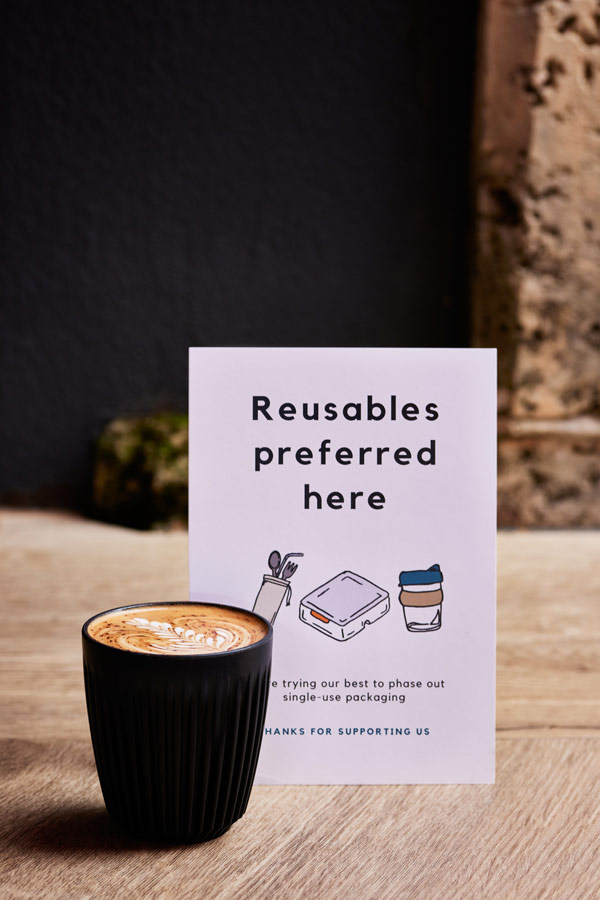
1. DISPLAYING SIGNAGE & ENCOURAGING REUSE
Ask cafes to display signage promoting reusables. This is a simple ask, as long as the cafe has room for signage and is happy to put these up.
We have Signage for Cafes available, or you can design your own based on our templates. Ensure the cafe is happy with the design of course!
Print signage on quality A4 or A5 board (A5 is often preferred) and offer to set it up near the POS.
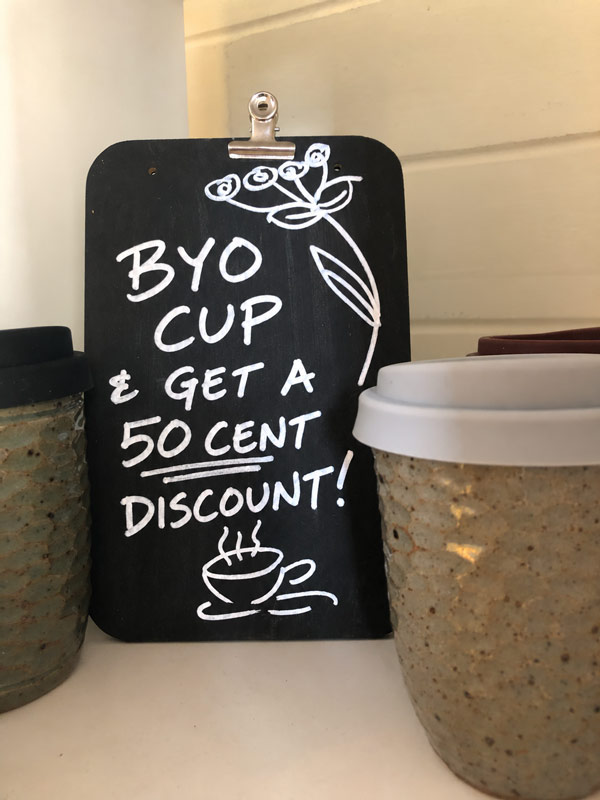
2. OFFERING DISCOUNTS OR LOYALTY CARDS
This is a good way to offer incentives for your staff, as well as collecting data for your program if the cafe is willing to offer it. Discounts of around 50c typically work best.
Your workplace could fund the discount by reimbursing the cafe or providing an upfront budget.
Your staff can be identified through security cards or other means (e.g., loyalty cards).

3. COLLECTING POINT-OF-SALE (POS) DATA
Cafes can modify their POS to track reusable vs single-use cup sales, however, most cafes are unlikely to do this unless discounts (which require a modifier) are also offered. This data is not needed to measure your program, but it can be a nice bonus if they are willing.
Bear in mind that the POS data is subject to error, as staff may forget to use the new modifiers.
Many cafes may not know how to modify their POS. We have provided a POS Setup Guide (docx) to assist.
When deciding on which cafes to approach for further participation, choose aligned cafes who have a genuine ethos around reuse.
You will likely need to talk to the owner or manager. Identify when they will be there or get their contact details and send them a short email. We have provided a template Email/Letter of Engagement (docx) to assist you.
When discussing their participation, it helps to outline potential benefits to them, such as increased patronage of your staff, or their inclusion media promotion at the end of your program.
Resources for this step
4. CONTINUED LIAISON WITH PARTICIPATING CAFES (OPTIONAL)
Keep in touch with the cafes, and work together on initiatives you implemented together.
If they are collecting POS data, touch base with them regularly to obtain this data (monthly is ideal), and identify and work through any issues with them.
Ensure to thank them for their help, a little appreciation goes a long way!
ACTION 5 – BEHAVIOUR CHANGE
Initiatives that influence a change in behaviour are central to this program. In this section, you’ll choose the actions that will help shift your staff’s habits towards reuse.
STEPS
1. REVIEW YOUR EMPLOYEE SURVEY RESULTS
This action will help you identify the main barriers to change at your workplace. Common examples include employees forgetting to bring their reusable cups or feeling they lack time to dine in.
Also, consider the benefits staff have highlighted, such as feeling good about protecting the environment when using their own cups or saving money through discounts at cafes that support reusables.
If you don’t have your survey completed yet, utilise the common examples above, and have a brainstorming session to see if you can identify others you think might come into play.
You can start exploring the initiatives below, and refine them later when you have more information.
2. SELECT YOUR PROGRAM INITIATIVES
This step is about introducing new initiatives that help people make positive changes to their daily habits. We have designed these initiatives based around Behaviour Change principals.
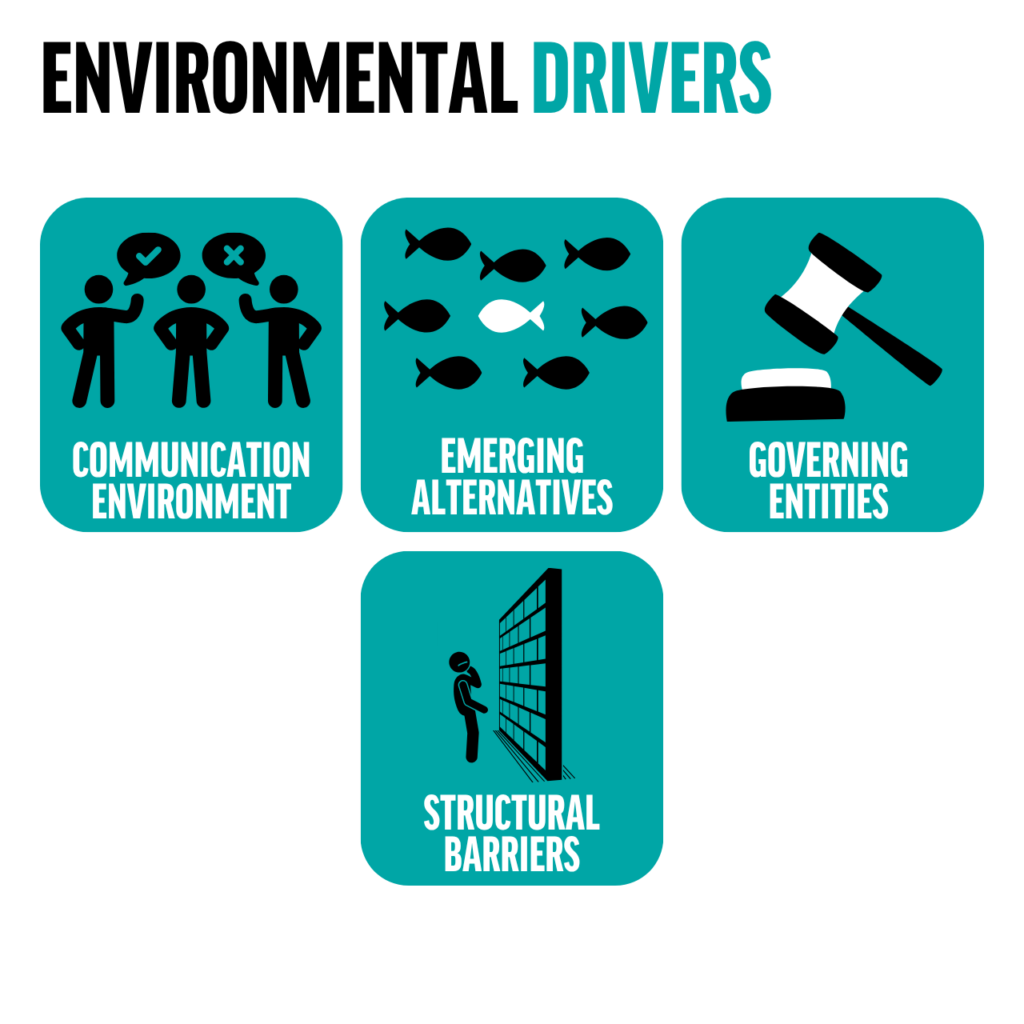
Research shows that education alone isn’t enough to motivate behaviour change. Instead, successful behaviour change programs address psychological, social, and environmental factors that drive behaviour.
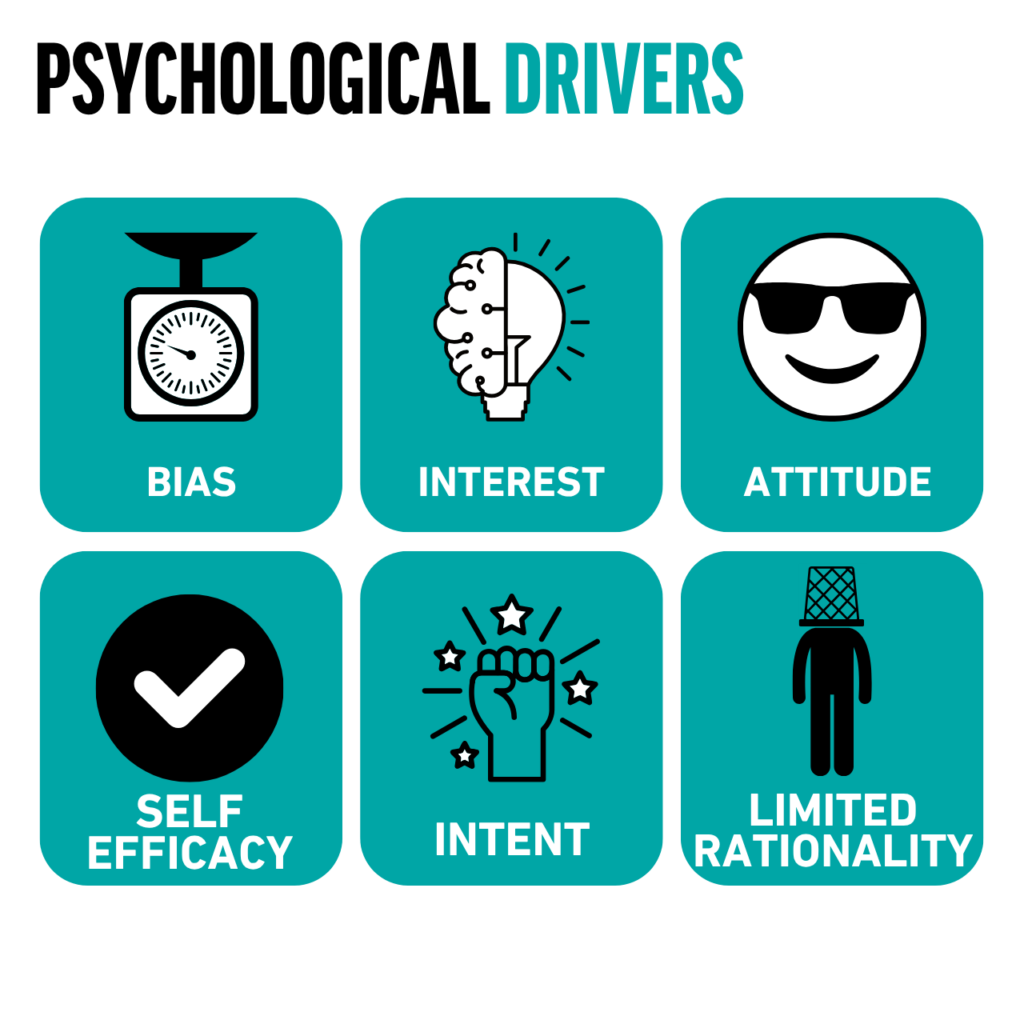
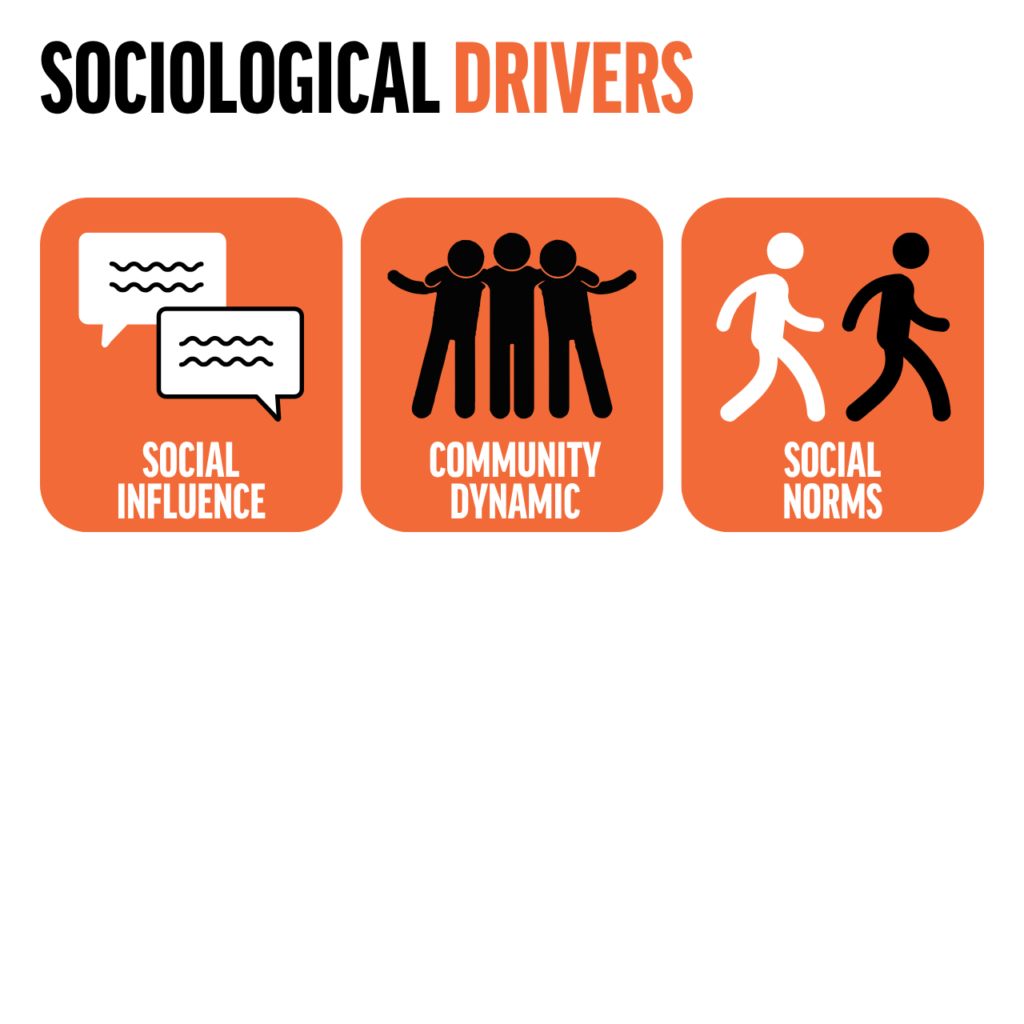
Selecting Initiatives
To make it easy for you, we’ve already done the research and testing, and have provided a list of initiatives that based on behaviour change principals to choose from below. Choose the initiatives that best suit your program. A mix of initiatives is good practice.
Find initiatives that suit your workplace
Browse all initiatives, or narrow the list based on your budget, timeframe and the problem you’re trying to solve.
Once you’re done, we’ve provided a template Behaviour Change Initiatives Strategy (docx) where you can record your preferred initiatives. Before you finalise this document, complete the next step to add your costs and timeframe for each initiative. Once finished, it can go into your Project Plan.
Resources for this step
3. CHECK YOUR BUDGET & TIMEFRAME
Budget
Prepare a budget for your chosen initiatives and ensure it matches your program budget. If not, you may need to change some initiatives. As exact costs will vary between regions and suppliers, we’ve provided a Budget Considerations Checklist (docx) to understanding the rough costs. From there, you can research more exact costings.
Timeframe
To keep people engaged, it is best to roll-out initiatives over varying timeframes. We find that regular actions keeps engagement levels up – see our example below from a program we ran in 2024 comparing timeframe with observational survey data.
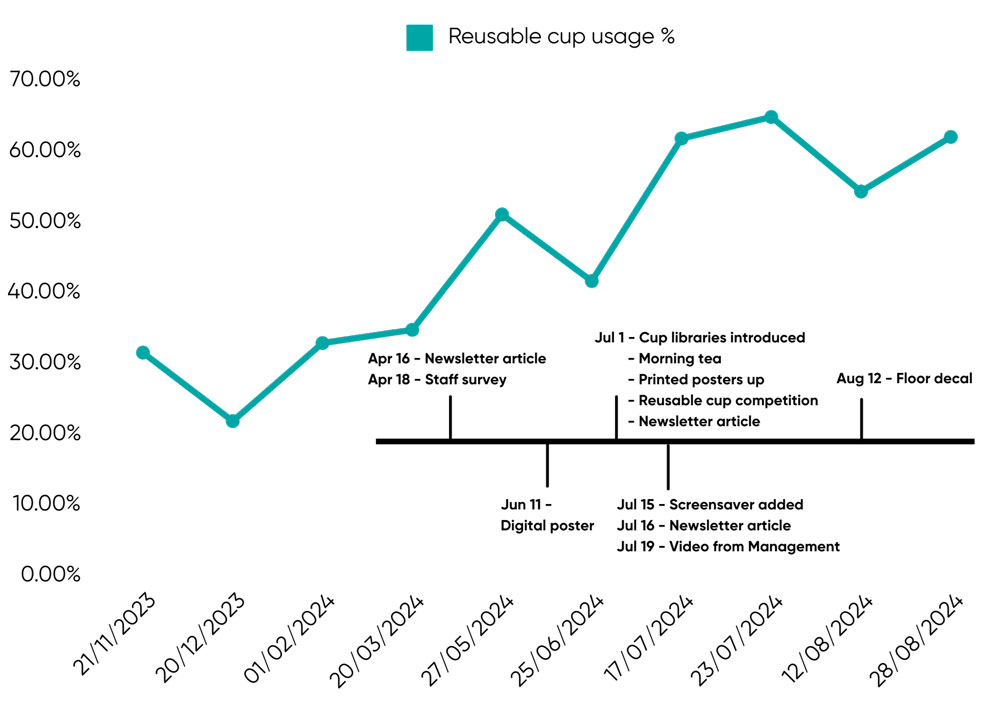
We’ve developed an Initiatives Timeframe Example (pdf) to demonstrate how initiatives might be rolled out. Once complete, you can add everything into your Project Plan.
Resources for this step
4. CREATE YOUR COMMUNICATIONS STRATEGY
Communication is at the heart of every behaviour change program. The main goal is to influence a culture that embraces reusables, and well-designed employee communications strategy will help you achieve this.
Align your communications strategy with any insights gathered from staff surveys. Things to consider are what key messages will be best received by staff, what communication style will most appeal, and how you can utilise existing communication channels.
Your program initiatives will be central to your communications strategy. Each initiative will have relevant communications, which will need to be captured in the communications strategy.
At a minimum, your communications strategy should include the following:
- All communications actions associated with the behaviour change initiatives you identified.
- The channels to be used for each action (e.g. staff newsletters, noticeboards, the intranet, staff meetings/morning teas etc.).
- Responsibilities for content creation, delivery and approvals.
- Delivery timeframes.
We’ve developed a Communications Strategy Template (docx) to get started.
Once complete, add this information to the communications section of your Project Plan.
Resources for this step
5. CREATE YOUR COMMUNICATIONS
Clear and engaging visual communication is key to a successful program. Style and messaging will be workplace specific, but these tips can be applied to all contexts:
- Use internal expertise. If you have a communications or marketing team, involve them.
- Keep branding consistent. Use either your organisation’s existing branding or create a fresh look for the program. Either way, just ensure all visuals align.
- Make messaging simple. Keep messages clear, concise, and easy to understand.
- Program slogans can be helpful. If you have a catchy tagline, include this where relevant.
- Know your audience. Consider whether a professional or casual tone will appeal more to staff.
We’ve provided several documents to assist you:
- Poster Examples (pdf) for ideas to help you create your own posters
- Newsletter Example (pdf) for ideas to help you create your own newsletters
- Facts on Single-use Plastic (docx) for facts to put into newsletter and memos
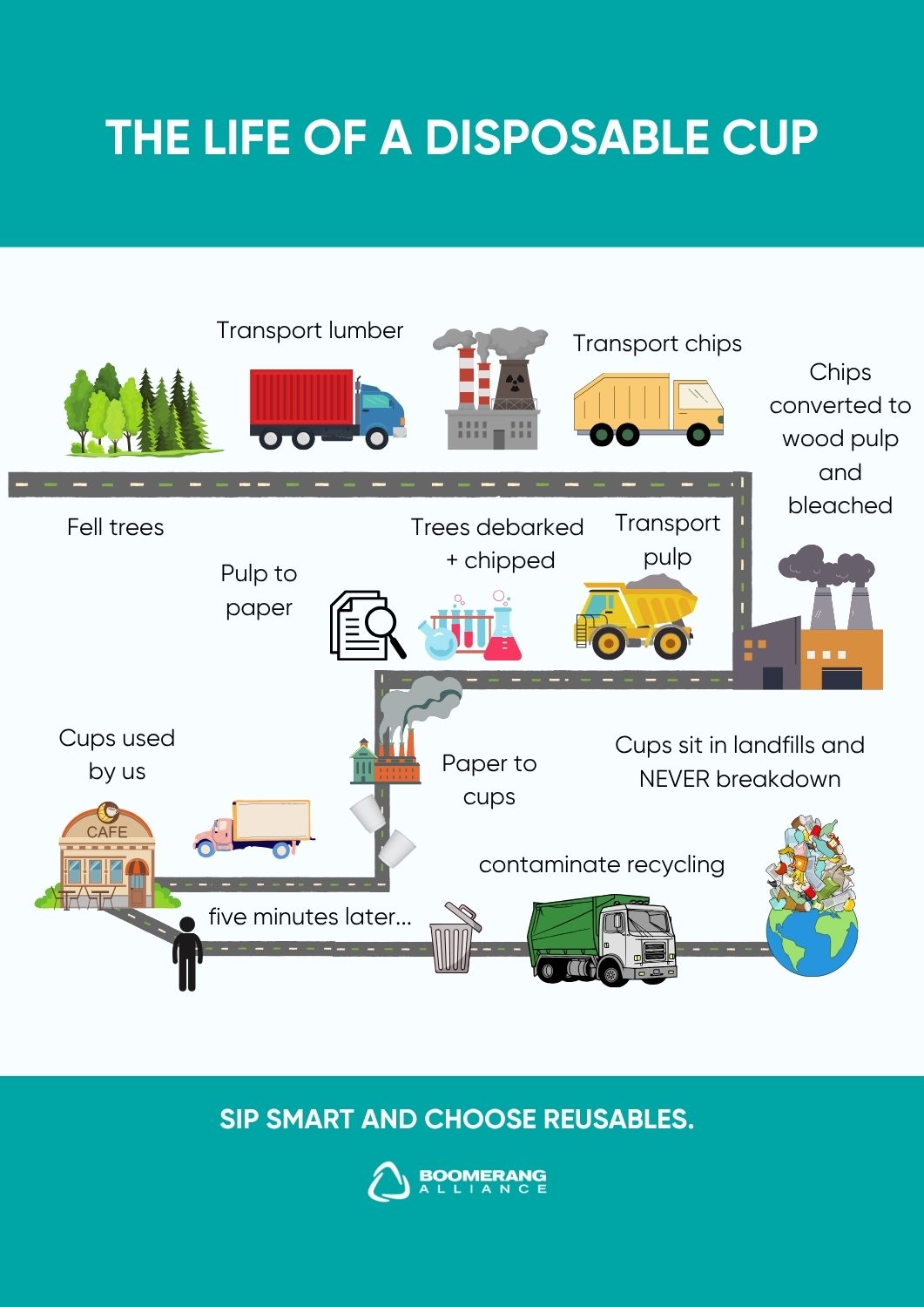
- Infographic on the life of a disposable cup (jpg) for use in newsletter and memos
Resources for this step
ACTION 6 – PROMOTION
Sharing your achievements with the world showcases your commitment to sustainability and positions your organisation as an industry leader.
Recognition also acknowledges the efforts of your staff, improving morale and retention, and attracts talent who want to work for a organisation making a positive impact on the planet.
STEPS
1. WORK WITH YOUR COMMS TEAM ON OPTIONS
Identify avenues for external promotion with your team. Here are some ideas to begin with:
- Media Prepare a media release and participate in media events near the project’s end to highlight results. Connect with local environmental organisations also championing plastic free causes to build on a movement!
- Webpage Create a webpage with project details, updates, photos, and resources. Encourage people to share it on social media to create more awareness.
- Case Study Document the project as a case study to inspire others.
- Social Media Create and share content on social platforms. This can be done any time from the project launch onwards.
2. CREATE A PROMOTION STRATEGY & GET APPROVAL
Once you’ve decided on the content and channels, fill in the Promotion Strategy Template (docx). Then obtain all the necessary approvals on your Promotion Strategy.
Resources for this step
3. CREATE YOUR MATERIALS & START PROMOTING!
It’s time to tell the world about your story.
Create materials that will inspire other workplaces to follow your lead – and link this guide to help them!
https://boomerangalliance.org.au/turn-your-office-into-a-reusable-workplace/