Cut The Wrap

SHARE
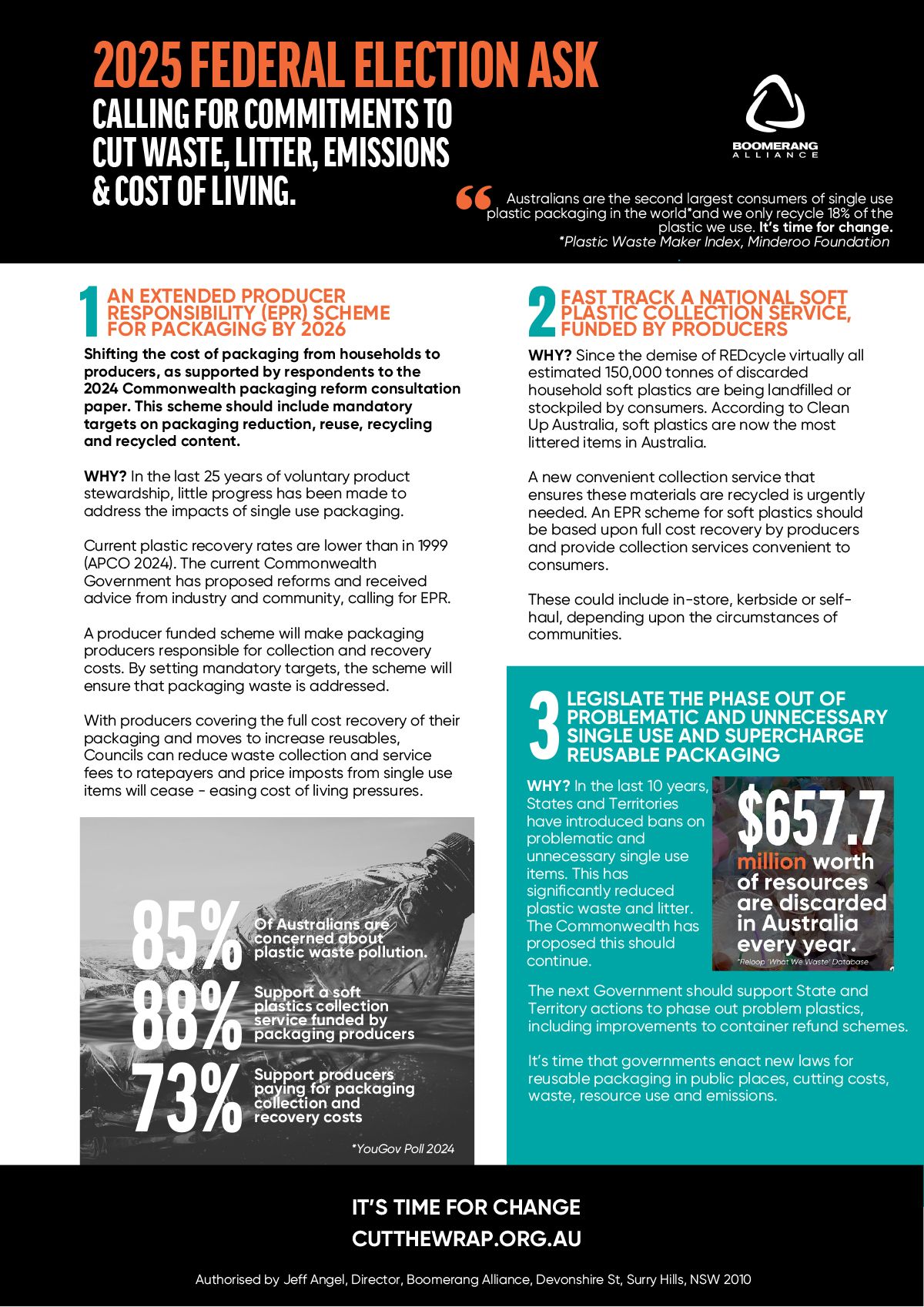
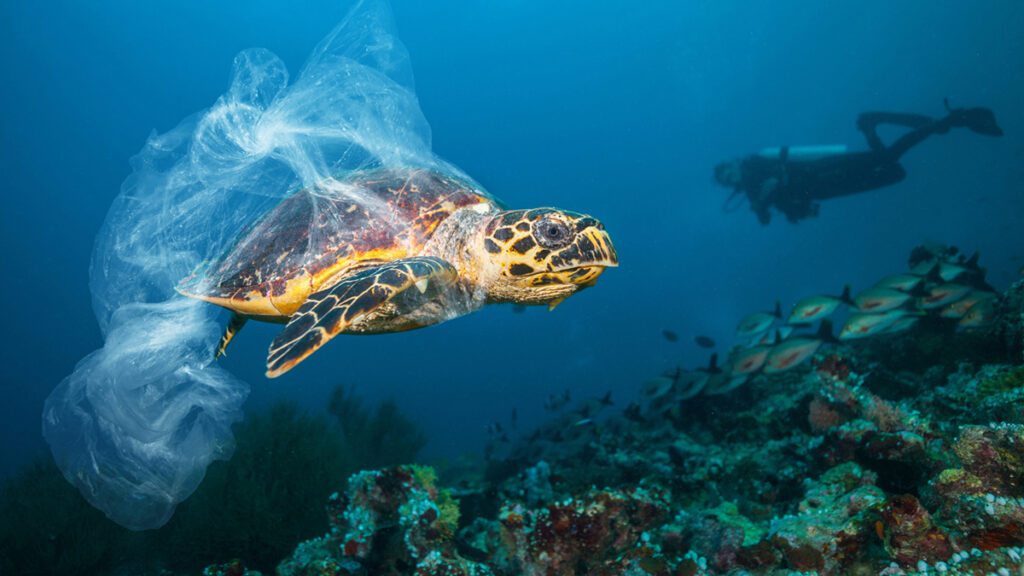
Now is our chance to stop wasteful packaging at the source by introducing laws that make producers responsible.

In 2023, the Commonwealth Government began the process of introducing a national Product Stewardship Scheme for Packaging designed to enforce Australia’s (currently voluntary) national waste targets and overhaul Australia’s packaging landscape to bring us in line with global best practice.

During the Global Plastics Treaty negotiations, Australia positioned itself as part of the High Ambition Coalition, and although, at this stage, the treaty result wasn’t what we hoped for, we must take action at home. 2026 is our opportunity for the national rollout of mandatory ‘extended producer responsibility’, making brands, manufacturers and suppliers responsible for their packaging across the entire lifecycle. Mandatory producer responsibility ensures they must opt for better design to minimise waste from the outset, cover the full costs of collection, processing, recovery, and litter clean-ups, and support Australia’s 2030 targets of a 20% plastic reduction and 30% of packaging being reusable.

We need action on waste

Extended Producer Responsibility (EPR) shifts the responsibility of product waste from consumers to manufacturers. This video breaks down how EPR works, why it matters for the environment, and what it means for everyday products. Learn how companies can design smarter, greener solutions and reduce waste at the source.

National Packaging Solution

Packaging producers must take full responsibility and pay for packaging waste & pollution.

The Boomerang Alliance is challenging the packaging industry to take full responsibility and pay for the costs of its waste and pollution decisions.

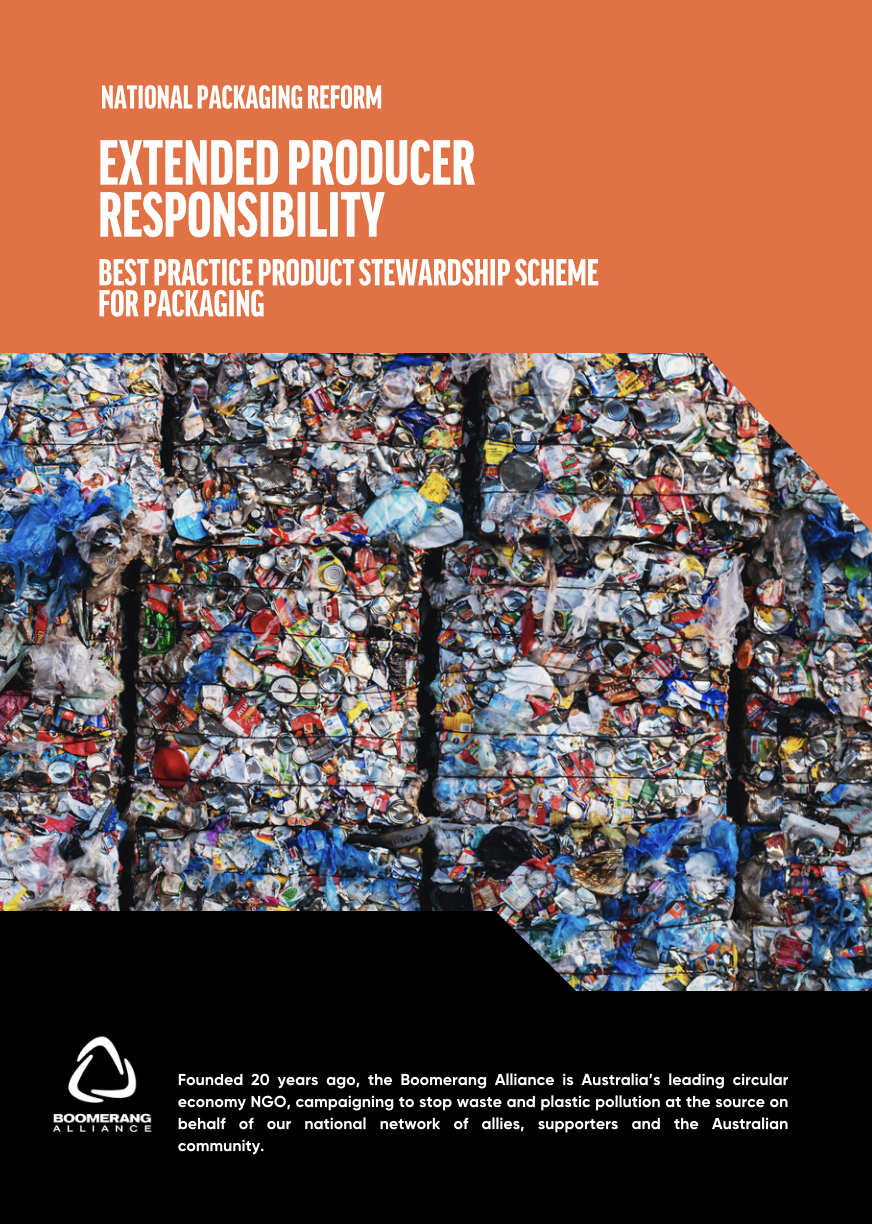
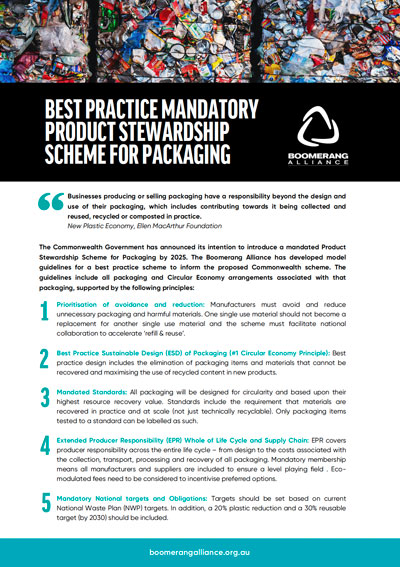
Ahead of the Commonwealth Government promising to introduce a Mandatory Product Stewardship Scheme for Packaging by 2025, we have released our model guidelines based on International best practice.

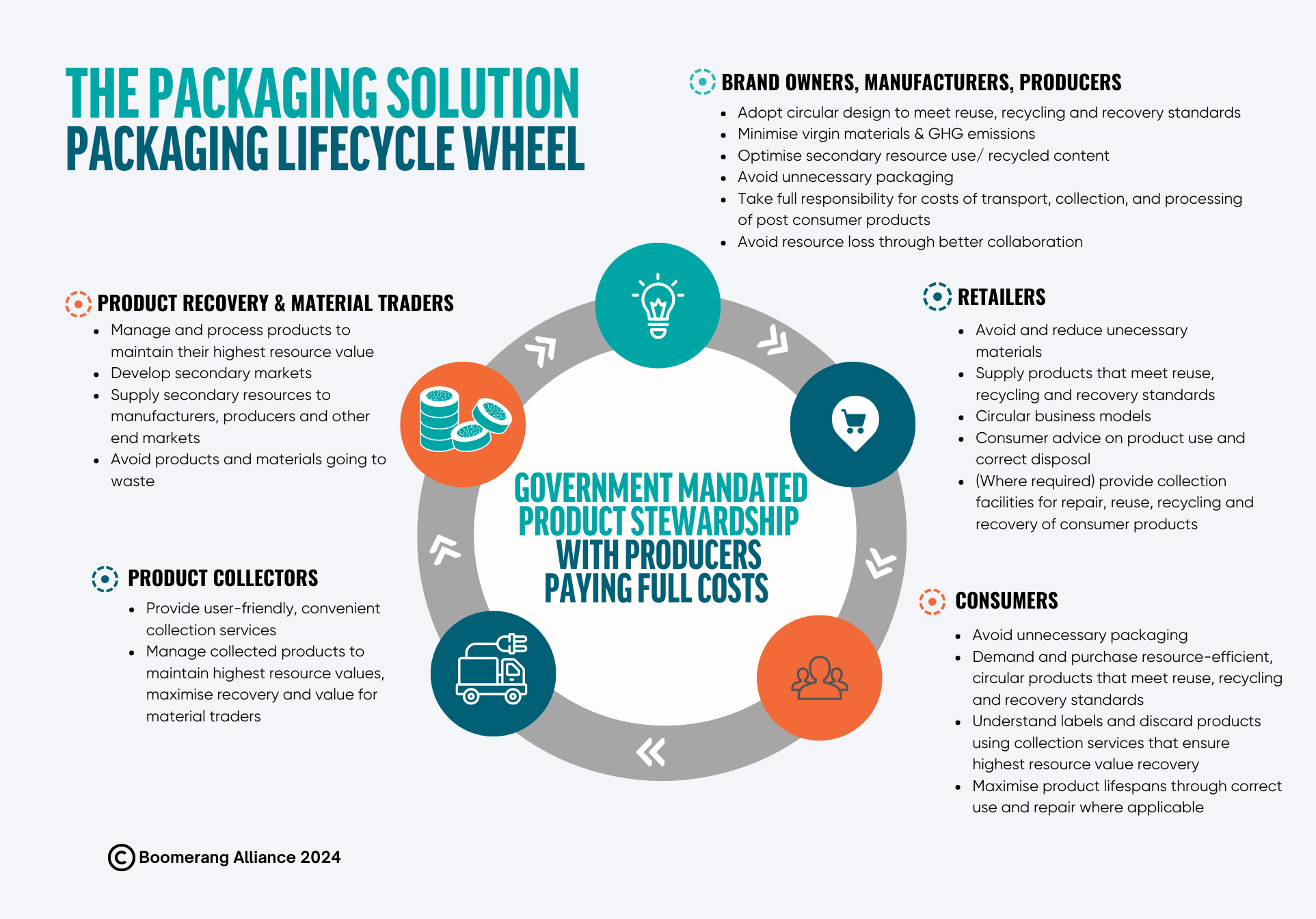
These include stringent Extended Producer Responsibility requirements where product manufacturers take full responsibility for their products, from the design stage through to end of life. This allows for products to be collected, recovered and reused rather than being littered or discarded in landfill.

Sign the petition to cut plastic packaging by 20% by 2030 and intrduce a 30% reuseable packaging target

CIRCULAR ECONOMY APPROACH

We demand a circular economy approach to packaging which involves the whole supply chain, with producers directly accountable for meeting stringent reduction, recovery and recycled content targets.

National actions required to achieve a best practice circular economy for packaging:

AUSTRALIA'S SOFT PLASTICS REFORM

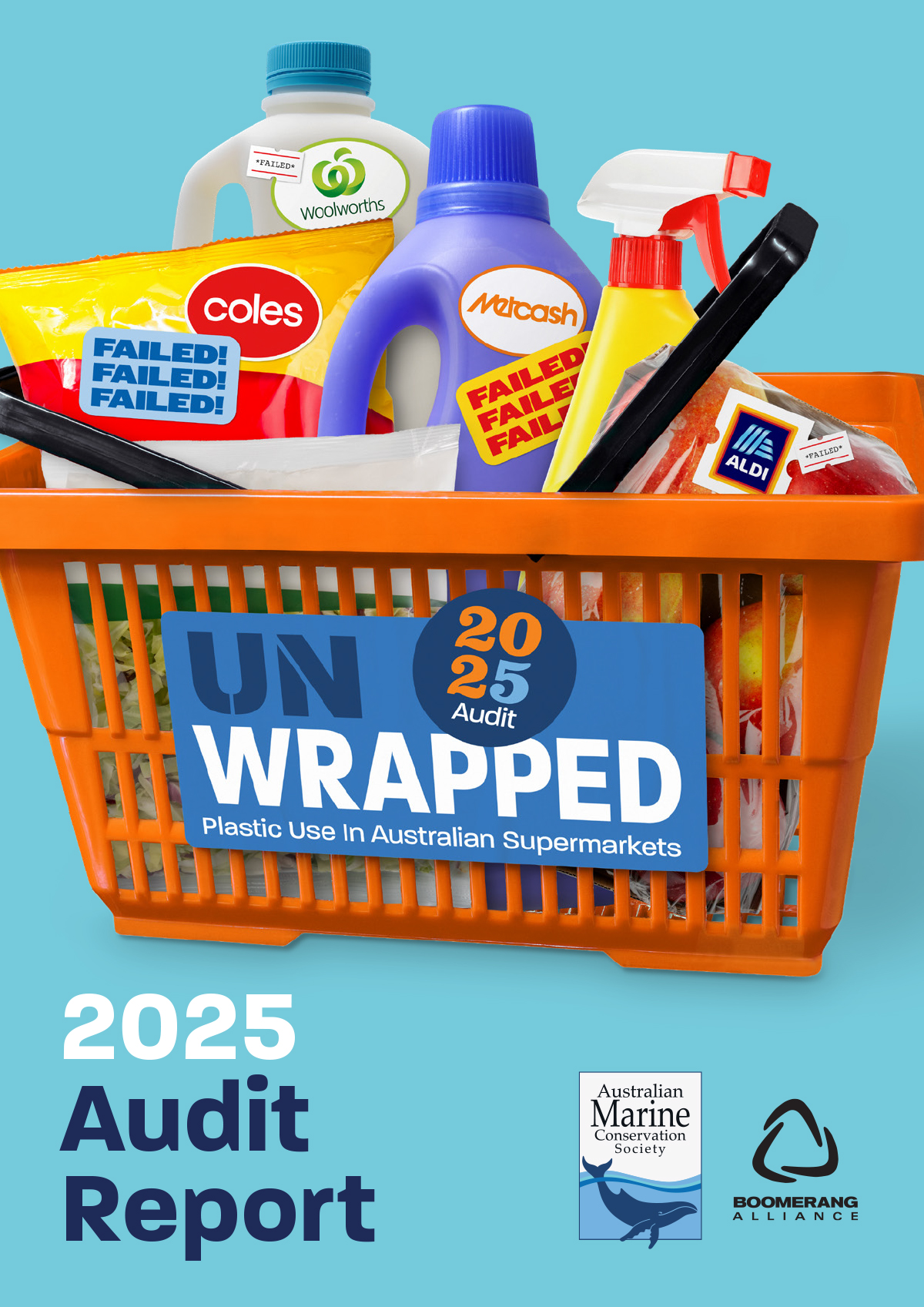
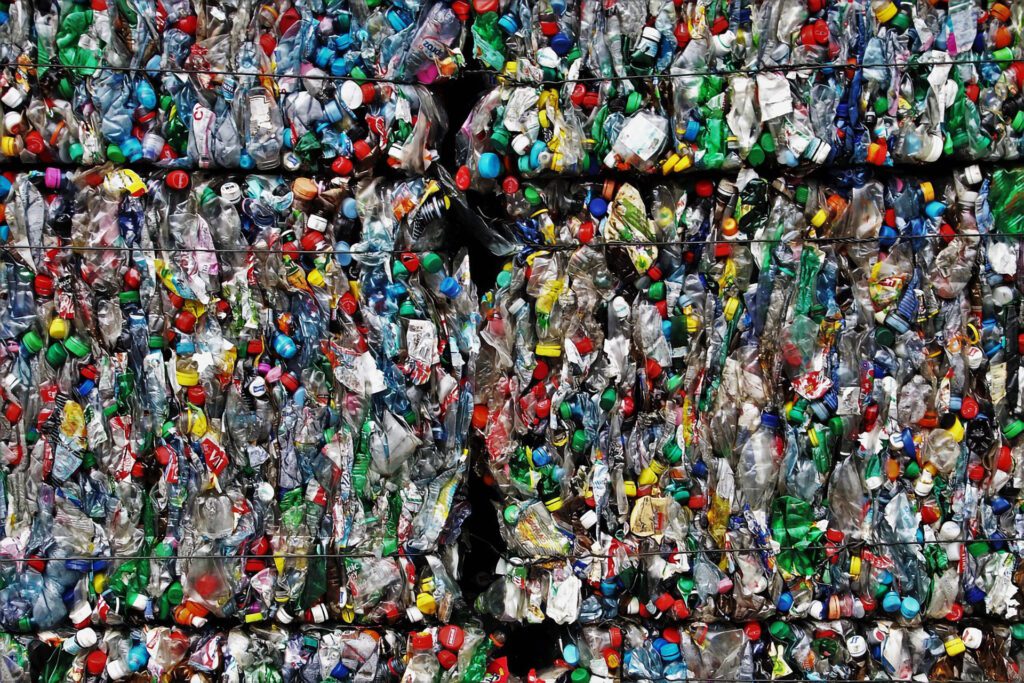
The soft plastics collection crisis, following the REDcycle collapse, is an example of an industry currently failing to take responsibility for its own packaging waste.

Given Australia’s alarmingly low national plastic packaging recycling rates (approx. 12%), major reform is urgently required and must include extended producer responsibility principles, similar to what is being applied to container refund schemes.

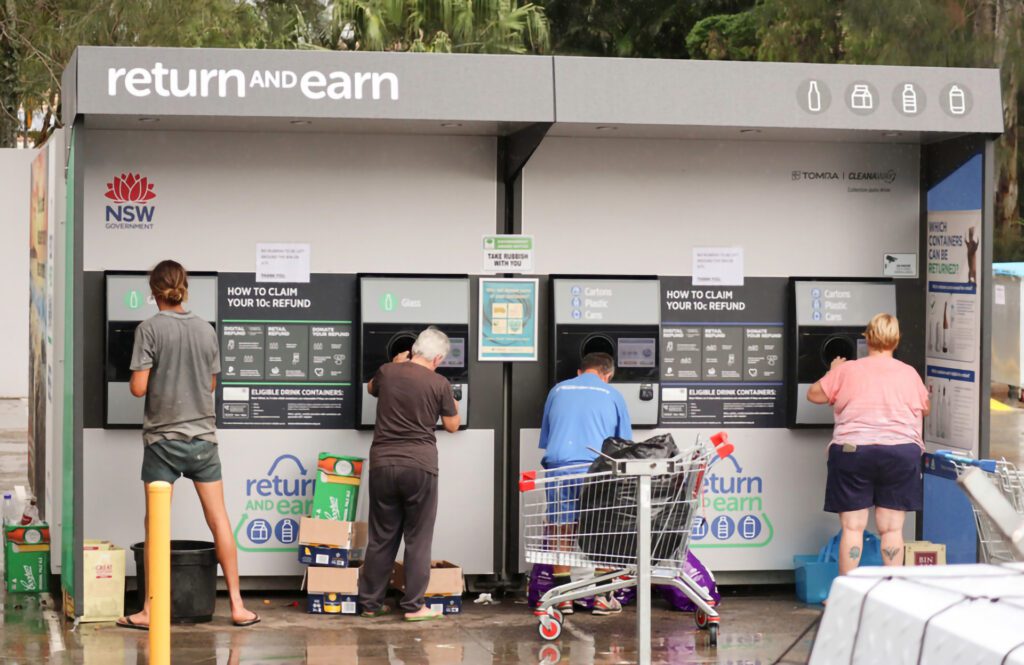
Container refund schemes are now active across Australia, where producers (the beverage industry) are responsible for the full costs associated with the recovery of their products and 60-80% of containers are now being collected for recycling, with some room for improvement.

In Europe, producers will have to cover the costs of collecting, transporting and treating problem plastics from 2024. The same should be happening in Australia.
10 GUIDING PRINCIPLES

We have identified 10 key principles that need to be included in Australia’s mandated national product stewardship scheme.

  1. Prioritising Avoidance and Reduction
  2. Best Practice Eco-Design of Products
  3. Mandated Standards
  4. Extended Producer Responsibility (EPR) across Whole of Life Cycle & Supply Chain
  5. Mandatory National Targets and Obligations
  6. Development of Secondary Markets
  7. A national scheme managed under Commonwealth legislation
  8. A standardised monitoring, compliance, and enforcement regime
  9. Commitment to continuous improvement
  10. Consumer Education and Awareness

In addition to full producer responsibility, packaging standards must include the requirement that packaging is actually recovered in practice. The standards cover packaging that is reusable, compostable or recyclable. The current Australian Recycling Label (ARL), for example, does not require packaging to be recycled in practice, with the result that most plastic packaging goes to landfill.

– Petition

From Promise to Policy

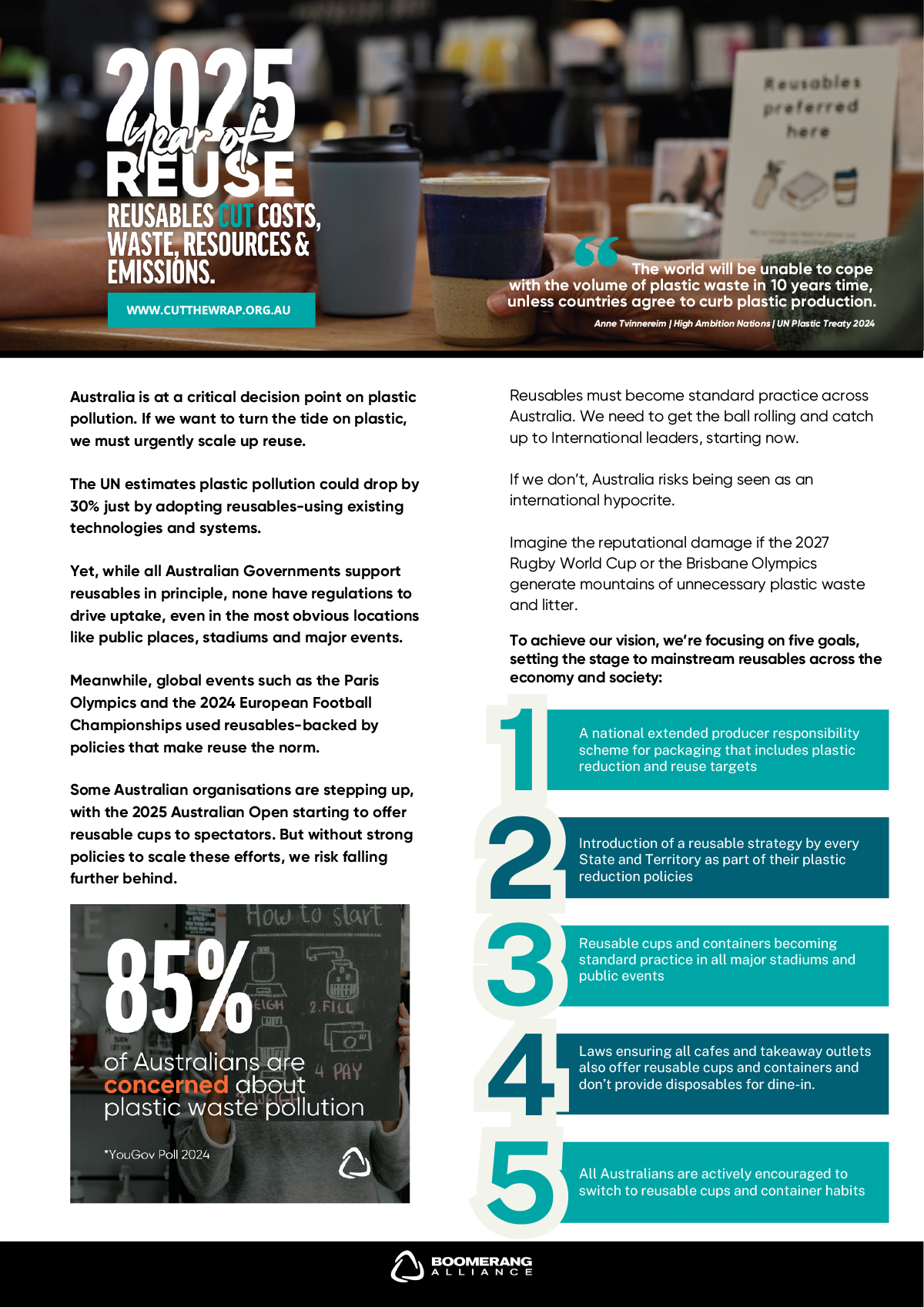
It’s time to tackle plastic pollution—starting with stronger packaging laws. With 85% of Australians concerned about plastic pollution, it’s time for new laws requiring producers to reduce, reuse, and recover packaging — cutting waste, lowering costs, and protecting our environment.

Source: YouGov poll, December 2024

HELP US create change

For more information see the pages below

Soft Plastics

We hear our communities cry for action on the soft plastics crisis. This is your go-to hub to get updates as they come.

Greenwashing

Greenwashing happens when environmental claims are exaggerated or misleading. Help us take action. 

Resources

Explore our campaigns

Together we can create a better future. 

Stay in the Loop.
Shape the Future.

Sign up to the Boomerang Alliance newsletter for exclusive updates, campaign news, and ways you can take action. Be the first to know what’s happening, and how you can help drive change.